AKG K553 MKII Review - A closed-back Neutral Option??
Hello guys, this is my first-ever time writing a review, so please bear with me if I don’t make much sense! I am writing this because of how thoroughly I’ve been impressed with these cans. I was window shopping on Flipkart, hungry for my next headphone (at this point, I admit I’m fully diving into the world of Hi-Fi audio). I eyed these headphones because Flipkart India had a clearance sale where they were going for ₹5600. For that price, these looked too good to be true, so I pulled the trigger, and I got them!
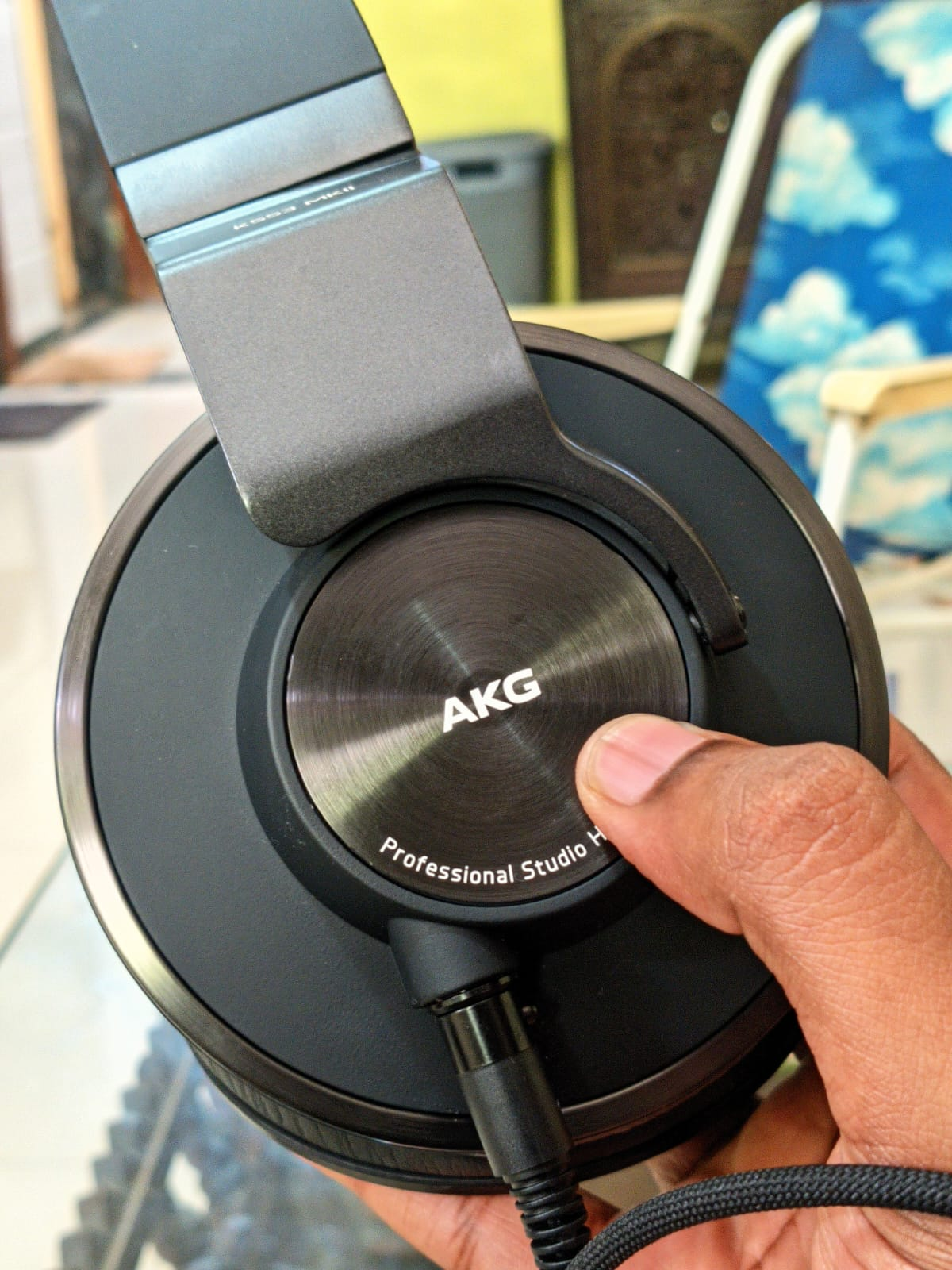
Sources used to power this headphone are my laptop (Asus Zephyrus G14 with Realtek ALC289) and the Shanling UA2.
I listen to a wide variety of music, ranging from atmospheric video game scores to heavy Kollywood masala BGMs. Because my library is so all over the place, listing specific test tracks wouldn't be very helpful, so I'll focus on how the gear handles different extremes in the sound comparisons.
BUILD
Coming to build, I was fairly impressed, at least in terms of AKG headphones. I own the AKG K701, and while they aren’t built badly, the build isn’t quite good either. There are failure points common to the K-series open-backs with self-adjusting headbands (the plastic retainers and elastic bands tend to wear out over time). With the K553 MKII, AKG has clearly stepped up their build game. The K55X series is definitely better built than the K361/K371 (I had one, and it didn’t last very long). While sharing some DNA with their flagship open-back line, I personally believe these are the best-built of the AKG lineup.
However, it isn't without flaws. The first of which is the headband, or lack thereof. In doing away with the suspension strap design, they put a piece of foam at the top with very minimal padding. It looks totally inadequate, but in reality, it is pretty comfortable. The large synthetic leather earpads, which share the massive circular footprint of the K712 and K612 open-backs, take center stage here. They offer minimal clamping force and plenty of room for my ears to rest inside the earcup, although sometimes my ear touches the top part of the earpads.
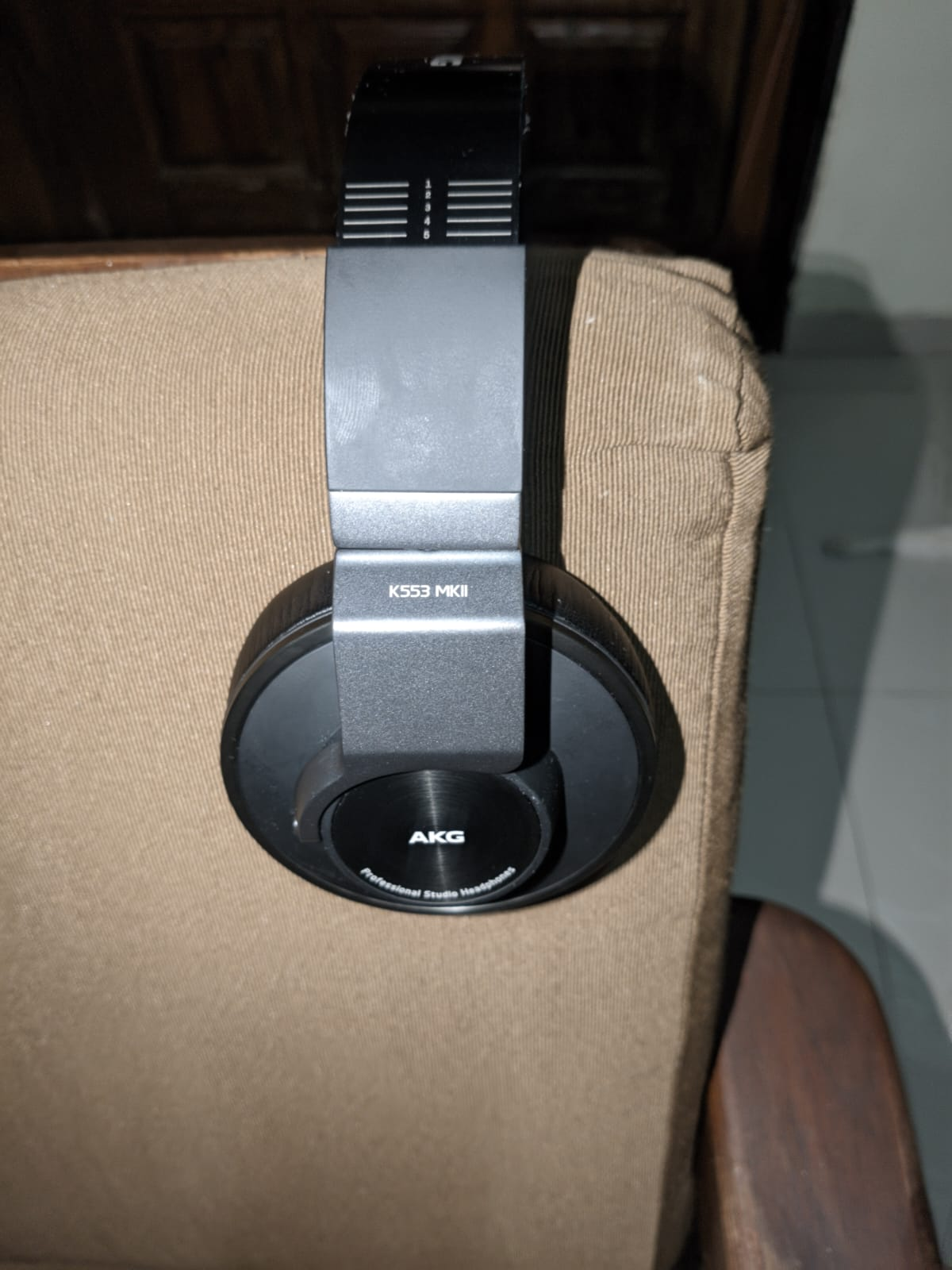
One major gripe I do have is that the unit I received appears to be NOS (New Old Stock, made circa 2016-2017 based on the serial number). Consequently, the already thin headband started to peel after mere hours of use. Honestly, for the deal and the sound quality, I can forgive that. They can also be laid flat on surfaces and come with a detachable 3-pin mini-XLR cable, the same as the K712 Pro. The rest of the build is super sturdy, featuring metal hinges and a numbered metal adjusting mechanism, which is a really nice touch.
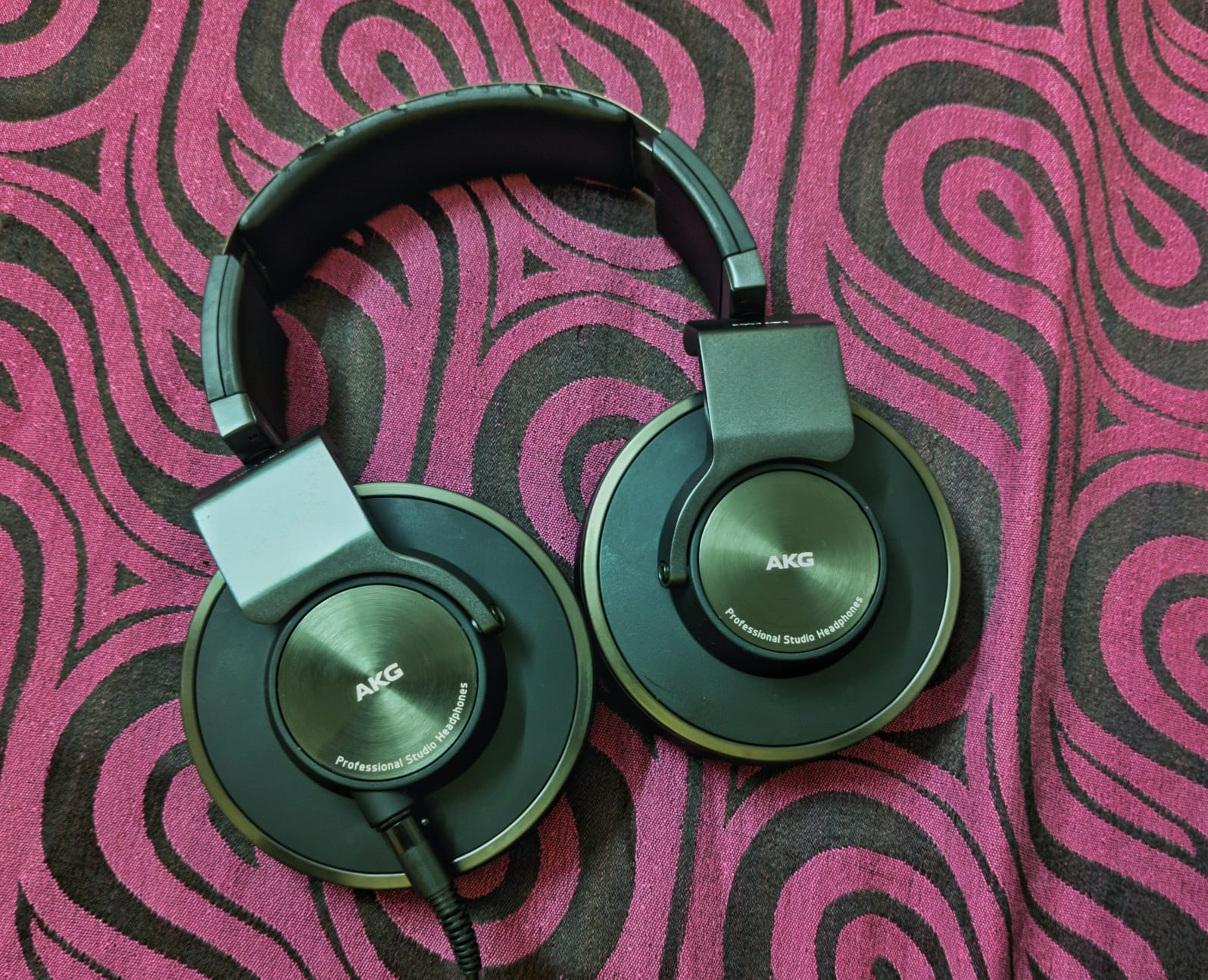
You can see the headband peeling at the top of this image.
Numbered Adjustment visible in this photo
.
Sound Quality and Comparisons
Now coming to the star of the show: the sound. These closed-back cans offer something pretty uncommon - a decently neutral-leaning tuning.
Bass
I say neutral-leaning because of the huge bass shelf this headphone has, which balances out the traditionally bright AKG house sound. Compared to the DT 770 Pros - which were the sub-bass kings in my eyes for a very long time - the K553 MKII has better rumble, though extension-wise, the DT 770 Pro seems to slightly pull ahead. When it comes to slam and mid-bass punch, the AKG has great transient response and decay. It delivers less slam than the M50x (a very mid-bass punchy set), but still enough to satisfy the basshead in me.
Mids
This is where the AKG really shines. One of the nicer things about the tuning is a slight mid-bass tuck around 80-100 Hz, which really helps with the sense of separation from the bass to the lower mids. The DT 770 Pros do something similar, but at a slightly higher frequency range, causing some male vocals and instruments to sound a little distant. On the M50x, this lower-mid region is very boosted, leading to a boomy, aggressive presentation. While that makes the M50x great for vocal and instrument tracking, it becomes annoying for casual listening because everything is pushed too far forward.
The AKG solves that issue beautifully. It offers a surprisingly wide stage for a closed-back headphone, and the mids are very natural with an excellent sense of separation. It lacks the significant colorations found in the DT 770 Pros or the M50x - not too forward, and not too recessed. In my opinion, this is one of the best mid-range focused closed-backs you can get in this tier.
Treble and Upper Mids
In the treble region, these three headphones take three different approaches, and I like the AKG’s implementation the best. The upper mids are quite forward; it's essentially a slightly tamed version of the bright open-back AKG house sound. Graph-wise, it is definitely less peaky than the Audio-Technicas and the Beyerdynamics, but without suffering any detail loss. It isn't piercing like the M50x, nor is it overly airy and harsh like the DT 770 Pros. It has just enough treble to make female vocals pop effortlessly. The only weird thing is a slight dip around the 4k-5kHz region, which could possibly be due to resonance from the closed-back housing, though I can’t confirm. Outside of that, the extension is smooth and well-executed.
Technical Performance, Imaging, and Soundstage
Technical performance could be argued as this headphone’s weakest aspect, but it is not that far behind. The M50x actually has the best detail retrieval of the three, closely followed by the DT 770 Pros. The AKG sits just a half-notch below the Beyer. When A/B testing these three, it is hard to pick apart the technical performance without splitting hairs; they are roughly equal, with the M50x pulling slightly ahead for tracking and monitoring purposes.
When it comes to imaging, the DT 770 Pro is still king. It is the only closed-back I’ve tested that rivals budget open-backs in soundstage and pinpoint accuracy. While the AKG has a stage comparable to the DT 770 in width and height, the forward/backward depth is shallower. Imaging mostly happens left-to-right, similar to the M50x, but it avoids the congested "three-blob" imaging of the Audio-Technica. Overall, the Beyers still win by a smidge.
TL;DR Summary & Head-to-Head
The AKG K553 MKII is a well-built, comfortable closed-back headphone that provides a surprisingly neutral tuning, balanced by a substantial bass shelf that counteracts the typical bright AKG house sound. It particularly excels in midrange, which is natural and well-separated, avoiding the overly boosted sound of the M50x and the recessed nature of the DT 770 Pro. While its technical performance, imaging, and soundstage fall slightly behind its competitors, the K553 MKII offers superior bass rumble and better-controlled, less-peaky treble, positioning it as one of the best mid-range focused closed-backs available in its tier.
TL;DR Metrics Breakdown:
Sub-Bass Extension
1)DT 770 Pro
2)AKG K553 MKII
3)ATH-M50x
Mid-Bass Punch
1)ATH-M50x
2)AKG K553 MKII
3)DT 770 Pro
Midrange
1)AKG K553 MKII
2)ATH-M50x
3)DT 770 Pro
Treble Control
1)AKG K553 MKII
2)DT 770 Pro
3)ATH-M50x
Technical Performance
1)ATH-M50x
2)DT 770 Pro
3)AKG K553 MKII
Soundstage & Imaging
1)DT 770 Pro
2)AKG K553 MKII
3)ATH-M50x
Thank you for reading, and keep enjoying listening to music !!! :D(and I have to improve my photography skills 🤣 )